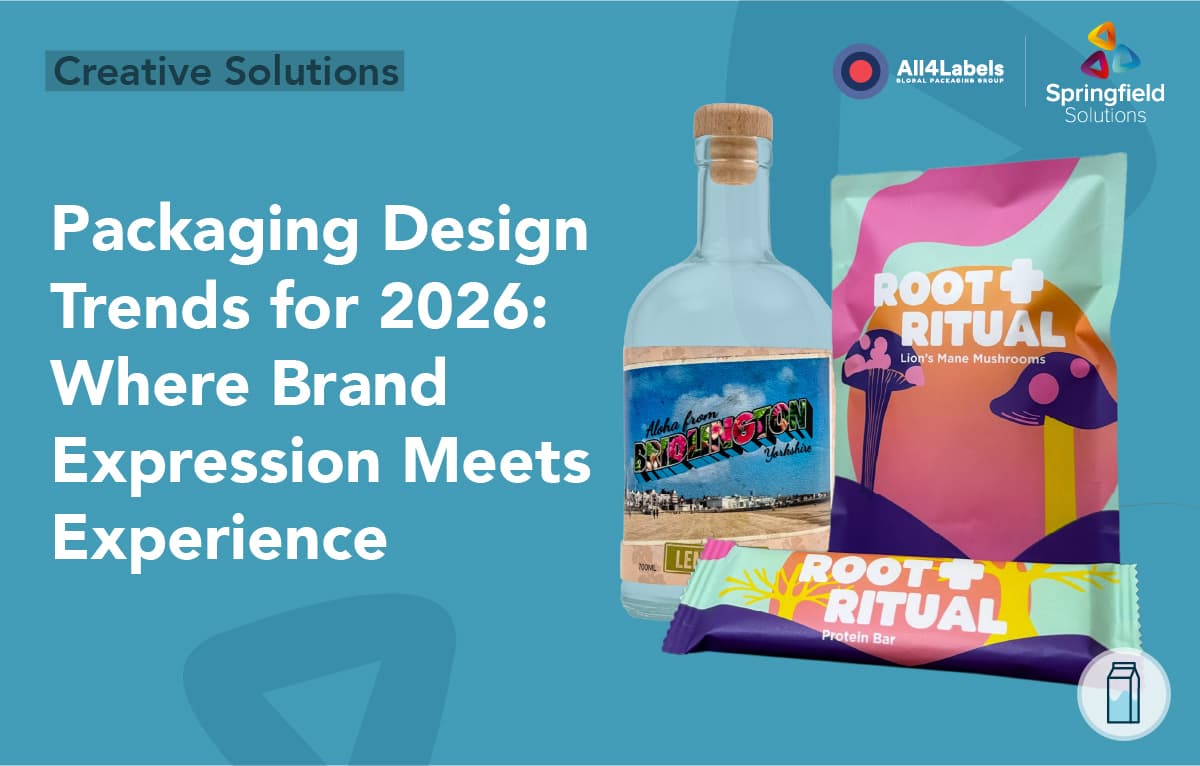
Packaging Design Trends for 2026: Where Brand Expression Meets Experience
As we move into 2026, packaging design is entering a new chapter. After years dominated by restraint, minimalism, and highly polished digital aesthetics, brands are shifting towards something far more expressive, human, and emotionally driven.
The influence of AI-generated content throughout 2025 has only accelerated this change, creating a renewed desire for design that feels authentic, tactile, and deliberately crafted.
For brand and packaging teams, this evolution presents both creative opportunity and operational challenge. Packaging is not just a container or compliance exercise.
It is the opportunity to create a powerful brand experience, capture attention, communicate values, and create a genuine connection in increasingly crowded markets.
Here are four key packaging design trends shaping 2026, and what they mean for brands.
1. Dopamine Design: Loud, Bold and Intentionally Joyful
Minimalism, step aside – it is time for maximalism.
In 2026, expect to see the continued rise of “dopamine design” in packaging — an approach rooted in colour, contrast, and character. Think vibrant palettes, playful or oversized typography, graphic icons, expressive patterns, and unexpected colour placements. The goal is simple: create an immediate emotional response.
Starter and challenger brands are leading this shift, particularly in sectors with rigid visual cues such as drinks, beauty, wellness, and food.
Where shelves were once filled with muted tones and familiar layouts, brands are now actively breaking category conventions to stand out. Colour is creeping into places it traditionally wouldn’t appear. Type is becoming a central visual device rather than a supporting one. Packs are designed not just to be recognised, but to be felt.
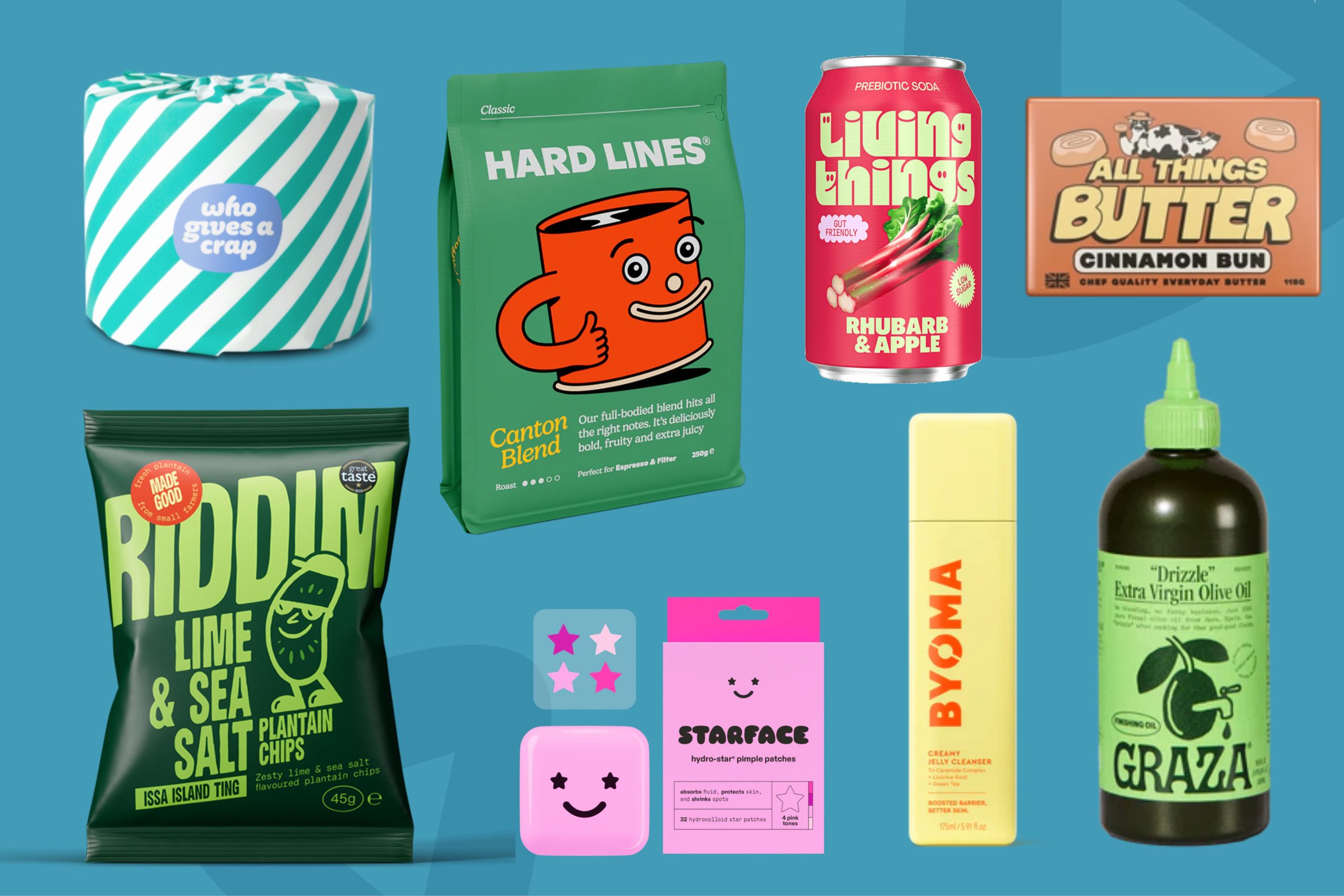
Examples of ‘Dopamine Design’ including packaging from: Who Gives a Crap, Hard Lines Coffee, Living Things Soda, All Things Butter, Riddim Snacks, Starface, Byoma and Graza.
While this approach offers huge potential for shelf impact and social shareability, it also brings technical complexity. Multi-layered graphics, intense colours, and unconventional finishes place greater demands on artwork preparation and print control. Maintaining consistency across substrates, formats, and print technologies becomes critical as brands scale.
This is where strong artwork management and reprographics expertise will be essential for brands. Ensuring that bold creative intent is preserved from concept through to production, without compromise.
2. Accessible Design: The New Standard
Sustainability has rightly dominated packaging conversations over the past decade. In 2026, accessibility is increasingly joining it as a baseline expectation.
Consumers are demanding packaging that is easier to read, easier to use, and more inclusive. Brands are being challenged to consider people with visual, cognitive, and physical impairments at the design stage, rather than treating accessibility as a retrofit.
This includes everything from clearer hierarchies, stronger contrast, and more legible typography to intuitive layouts, simplified information structures, and more thoughtful use of symbols.
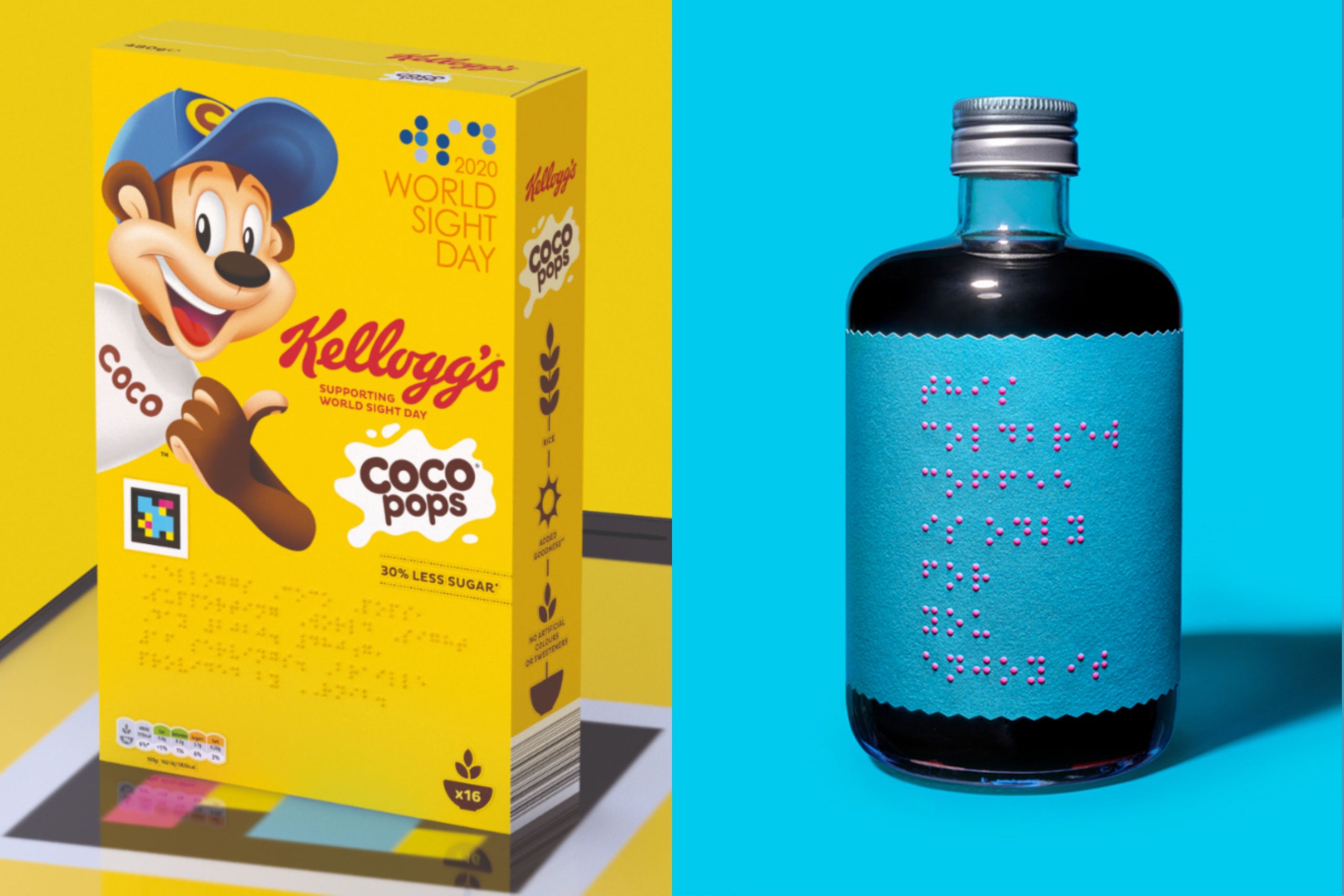
Accessible Packaging Design Examples: Kellanova NaviLens (left) and Supperstudio, “Only for Your Eyes” (right)
Accessible design is fast becoming the new standard for responsible branding. It reflects a broader understanding that truly sustainable packaging must serve the widest possible audience.
For many brands, this also aligns with regulatory pressures, retailer expectations, and the need to communicate increasingly complex information clearly.
From an artwork perspective, this trend reinforces the importance of precision, consistency, and governance. Packaging teams must balance creative ambition, regulatory compliance, and accessibility requirements across growing product portfolios and markets.
3. Collectability: When Packaging Becomes Something to Keep
As digital fatigue grows, consumers are reconnecting with physical experiences. The rise of analogue hobbies, from journalling and scrapbooking to print magazines and vinyl records, is influencing how people interact with brands.
Packaging is no longer automatically disposable. Increasingly, it is expected to be beautiful, meaningful, or limited enough to be worth keeping.
In 2026, more brands are designing packaging with collectability in mind. This includes limited-edition runs, seasonal designs, illustrative series, character-led packs, and evolving visual systems that encourage repeat purchase. In some sectors, packaging is becoming a core part of the product experience. Something for consumers to display, reuse, or share, rather than simply discard.
This trend opens new creative and commercial opportunities. However, it also introduces complexity. Version control, short runs, regional variations, and fast turnaround times can place significant pressure on packaging workflows. Artwork teams must manage growing numbers of SKUs while maintaining consistency, quality, and speed to market.
Digitally printed mock-ups to trial new designs, strong file management, and scalable artwork infrastructures are becoming increasingly important tools for brands exploring collectability.
4. Analogue Design: Imperfect, Human and Tactile
After an AI-saturated 2025, one of the most noticeable shifts in 2026 is a craving for authenticity. Brands are moving away from overly perfect, frictionless aesthetics and embracing design that feels human.
This is showing up through textured graphics, (intentionally) grainy images, collage techniques, mixed media, hand-drawn illustration, and expressive typography.
Imperfections are no longer something to eliminate; they are something to celebrate. These analogue-inspired aesthetics bring warmth, personality, and emotional depth to packaging – qualities that help brands feel more trustworthy, distinctive, and relatable.
However, analogue design still demands digital discipline. Texture-heavy artwork, layered compositions, and unconventional assets require careful file preparation, colour management, and reproduction expertise to ensure they translate accurately in print. The challenge for packaging teams is to preserve the character of handcrafted design while delivering the technical consistency required across materials, suppliers, and production sites.
Finding the balance between creative freedom and technical control will be key to execute this packaging design trend successfully.
What These Packaging Design Trends Mean for Brand Teams in 2026
Taken together, these packaging design trends point to a year where packaging and labelling becomes more expressive, more inclusive, and more emotionally driven — but also more complex.
Brand teams will be managing bolder creative, wider design systems, more versions, and higher consumer expectations. At the same time, they must navigate regulatory requirements, sustainability commitments, accessibility standards, and global consistency.
In this environment, packaging success is increasingly built on strong foundations: robust artwork processes, colour and file control, cross-functional collaboration, and partners who understand both creative ambition and production reality.
Turning Design Ambition into Scalable Packaging
The packaging design trends shaping 2026 are not about subtle evolution. They represent a decisive move towards packaging as experience. Your packaging has the ability to be something that delights, includes, and connects.
For brands, the opportunity is clear. But realising it requires more than great design alone. It demands the right structures, expertise, and artwork infrastructure to bring bold ideas to life consistently, compliantly, and at speed.
Springfield works with brand and packaging teams to translate creative vision into print-ready reality. Supporting everything from artwork creation and reprographics to colour management, mock-ups, and packaging asset control.
In a landscape where design is becoming richer and more demanding, that partnership is what allows innovation to scale.
If 2026 is the year you’re pushing creative boundaries, Springfield is here to help you bring those ideas to life with precision, consistency, and speed. Get in touch to explore how we support brand teams at every stage of the packaging journey.